
Androgenetic Alopecia
Androgenetic alopecia is patterned hair loss that develops under the influence of androgens. It includes male pattern hair loss and female pattern hair loss. The process is usually gradual, and it can run in families.
Medicines used to treat Androgenetic Alopecia


Key points
- Hair loss in this condition usually progresses over years rather than weeks.
- Treatment results generally take four to six months to become visible.
- Hair that grows back with treatment is usually lost again if treatment stops.
How it develops
Androgens act on hair follicles that are sensitive to them. Over repeated growth cycles, these follicles shrink, a process called follicular miniaturisation. The effect is on the follicle, so hormone levels can be normal.
Patterns to expect
In men, thinning often begins at the temples and crown. In women, thinning is usually spread over the top of the head, with the front hairline largely preserved. Patterned thinning or balding can affect either sex.
Treatment options
Medicines can slow hair loss and may help regrowth. Finasteride and dutasteride block 5-alpha reductase, reducing the production of dihydrotestosterone (DHT) in scalp tissue. Minoxidil lengthens the growth phase of follicles and increases blood flow in the scalp. Hair transplant surgery is a permanent option for pattern baldness.
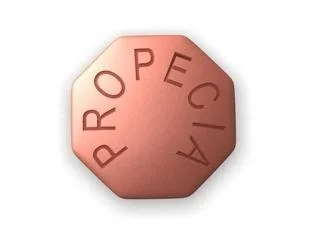
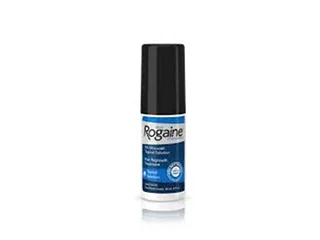
Finasteride is supplied as Propecia tablets in 1 mg and 5 mg strengths and Finpecia tablets in 1 mg. See finasteride. Rogaine is a minoxidil bottle in 5% and 10% strengths; see minoxidil. Avodart tablets contain dutasteride 0.5 mg; see dutasteride.
Orders from pharmacy partners in India are shipped to Malaysia in discreet packaging.
When to see a doctor
Seek medical assessment if hair loss is sudden, patchy, or accompanied by scalp itching or scaling. Other diagnoses include alopecia areata, tinea capitis and thyroid dysfunction.
What the sources say
- The tendency is usually genetic and may be inherited from one or both parents (Healthdirect).
- A doctor should be consulted when shedding is much heavier than usual or hair comes out in clumps (Healthdirect).
- If the scalp is more exposed, the head needs protection from sun damage (Healthdirect).
- Depression and anxiety, along with other mental health conditions, are more common in people with hair loss (Healthdirect).
Further reading
FAQ
What is androgenetic alopecia?
Androgenetic alopecia is patterned hair loss that develops under the influence of androgens. It includes male pattern hair loss and female pattern hair loss, and the process is usually gradual.
What causes androgenetic alopecia?
Androgenetic alopecia develops when androgens act on hair follicles that are sensitive to them, and over repeated growth cycles these follicles shrink. The tendency is usually genetic and may be inherited from one or both parents.
What are the symptoms of androgenetic alopecia?
Patterned thinning or balding can affect either sex. In men, thinning often begins at the temples and crown, while in women it is usually spread over the top of the head with the front hairline largely preserved.
How is androgenetic alopecia treated?
Medicines can slow hair loss and may help regrowth. Finasteride and dutasteride block 5-alpha reductase, reducing the production of dihydrotestosterone (DHT) in scalp tissue, and minoxidil lengthens the growth phase of follicles and increases blood flow in the scalp. Hair transplant surgery is a permanent option for pattern baldness.
What can I order for androgenetic alopecia?
The medicines listed for androgenetic alopecia are made with finasteride, minoxidil and dutasteride, for example Propecia and Finpecia. Each product page shows its strengths and forms.
Where can I buy medicines for androgenetic alopecia online?
Our pharmacy partners send orders from India to Malaysia in plain, discreet packaging. Express Tracked Courier takes up to 1 week; Standard Airmail can take up to 3 weeks.
How ordering works →Last updated