
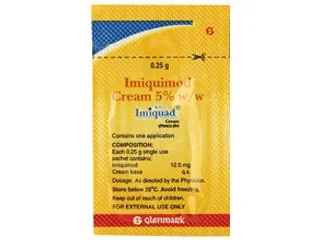
Imiquimod Cream
5%
Imiquimod cream contains imiquimod and is used for actinic keratosis and external genital warts. It comes in one strength and several pack sizes. Each option lists its price per tube.
FromUS$10.13/ tubeView
Actinic keratosis, also called solar keratosis, is a skin condition that causes dry, scaly patches on sun-damaged skin. A small proportion of patches can become skin cancer, so they are treated and monitored rather than ignored.
5%
Imiquimod cream contains imiquimod and is used for actinic keratosis and external genital warts. It comes in one strength and several pack sizes. Each option lists its price per tube.
Actinic keratosis is linked to long-term ultraviolet exposure. People with fair skin who live where ultraviolet exposure is high are more vulnerable.
The skin can feel rough, dry and scaly, with a texture like sandpaper.
Options include prescription creams or gels, freezing, minor surgery and photodynamic therapy. Imiquimod Cream 5% comes as a tube and is used for actinic keratosis. Imiquimod works by stimulating the local immune response to clear abnormal cells. Orders are shipped from pharmacy partners in India to Malaysia in discreet packaging.
A patch that becomes tender, thickened, ulcerated or larger needs medical assessment, as does one that changes shape, bleeds or grows rapidly.
Last updated