Key points
- Imiquimod cream is intended for adults.
- Onset and treatment duration are measured in weeks.
- Imiquimod does not cure warts; new warts may appear during treatment, and it is not known whether it prevents spread to other people.
What it is used for
Imiquimod cream treats certain types of actinic keratosis, superficial basal cell carcinoma and genital warts. Actinic keratoses are flat, scaly growths caused by too much sun exposure. Genital warts appear on the skin of the genital and anal areas. Superficial basal cell carcinoma is a type of skin cancer. The cream is applied to the affected area, so it is a local skin treatment rather than a treatment for a condition throughout the body.
How it works
Imiquimod is an immune response modifier. It induces cytokines, including interferon-alpha, which help the immune system target viral infections and malignant skin cells. This is different from a medicine that attacks a virus or destroys abnormal cells directly. The immune response is local to the skin where the cream is applied.
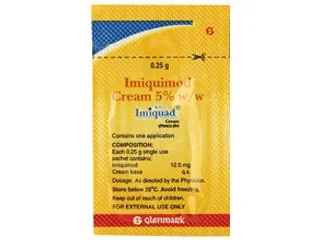
Imiquimod is supplied as a cream. MayChemist supplies Imiquimod Cream 5% in a tube. The cream is for topical application to the skin. Pharmacy partners in India ship orders to Malaysia in discreet packaging.
Safety
Do not use imiquimod if you are allergic to it. Apply it only to affected areas and wash your hands thoroughly afterwards. Avoid sunlight and sunbeds while using it.
Common reactions include redness (erythema), itching and scabbing. Excoriation, oedema and skin ulceration can also occur. Severe dermatitis and systemic flu-like symptoms need immediate medical attention. Serious skin reactions can include skin breakdown or sores that may have drainage, especially during the first week of treatment. Flu-like symptoms can include nausea, fever, chills, tiredness, and muscle weakness or pain.
Pregnancy: use only if necessary; tell your doctor if you are pregnant or planning pregnancy. One clinical reference notes that data are limited and that imiquimod is not currently recommended in pregnancy. Breastfeeding: use with caution, tell your doctor, and avoid applying the cream to areas an infant would come into contact with while breastfeeding. If you become pregnant while using imiquimod, call your doctor.
What the sources say
- A clinical reference describes imiquimod as FDA-approved for external anogenital warts, actinic keratoses and superficial basal cell carcinomas. (NCBI)
- In basal cell carcinoma, a reported five-year success rate of 82.5% for imiquimod was lower than that of excision; the treatment may still be chosen if a person declines surgery or cannot have it. (NCBI)
- A clinical reference advises caution when imiquimod is applied to large skin areas in people who have autoimmune disease, because the immune effect may become systemic. (NCBI)
Further reading